
Baseline 560 EC
Baseline 560 EC Herbicide: Complete Guide to Active Ingredients & Formulation
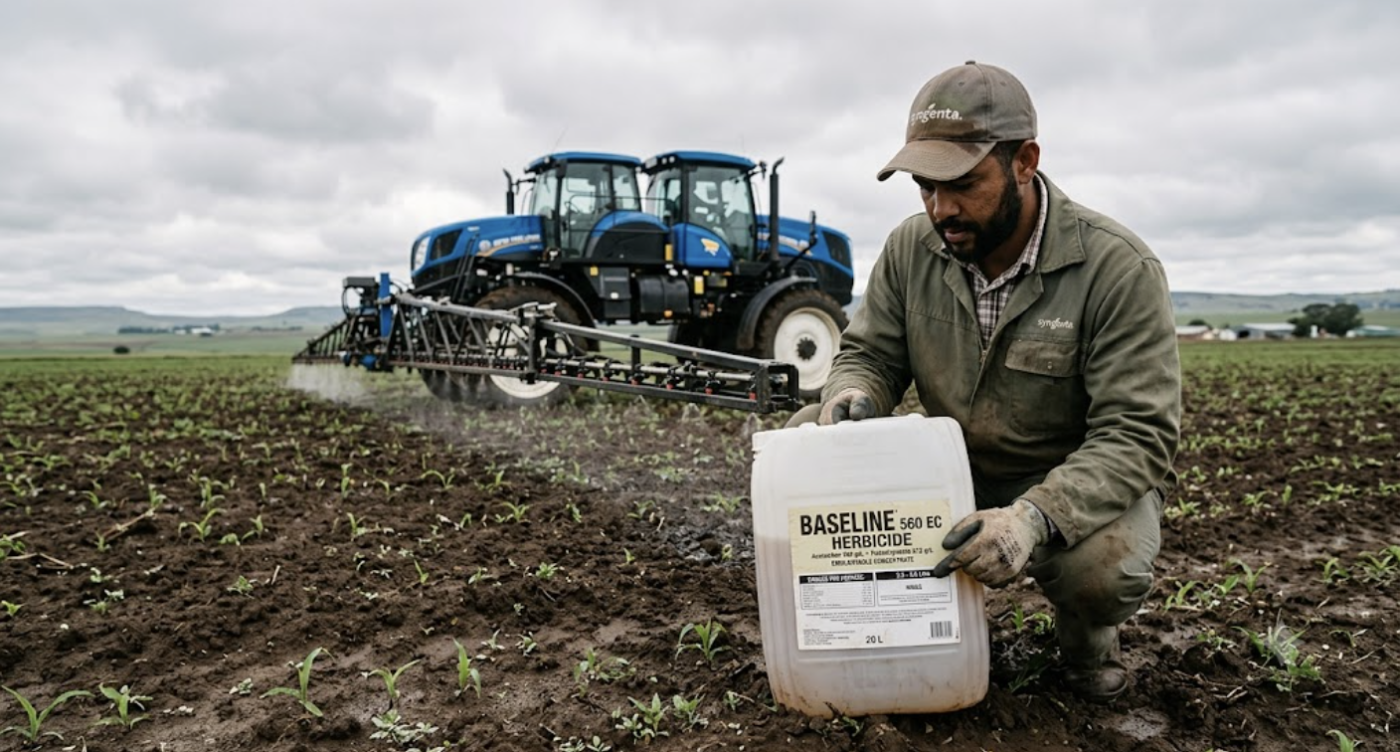
Aug
Baseline 560 EC Herbicide – Managing heavy weed pressure in commercial crop production requires broad-spectrum control, long-lasting residual action, and seamless tank mixing. Baseline 560 EC is a widely trusted pre-emergence herbicide formulation designed to deliver systemic control over both annual broadleaf weeds and annual grasses.
This guide breaks down the science, active ingredients, mode of action, and best practices for applying Baseline 560 EC in modern weed management programs.
What is Baseline 560 EC?
Baseline 560 EC is an emulsifiable concentrate (EC) herbicide formulated for pre-emergence and early post-emergence weed control in crops like maize (corn). The “560” designation signifies that the product contains 560 grams per liter (g/L) of active ingredients combined.
Because it is formulated as an emulsifiable concentrate, the active ingredients are dissolved in an organic solvent along with emulsifiers. When mixed with water in a spray tank, it forms a milky-white emulsion that ensures even coverage, stable suspension, and high bioavailability on the soil surface.
Active Ingredients & Chemical Formulation
The power of Baseline 560 EC comes from its dual-action co-formulation. It combines an acetochlor terbuthylazine herbicide mix to target different target sites within weed seedlings.
       ┌──────────────────────────────────────────┐
       │     Baseline 560 EC Active Ingredients   │
       └────────────────────┬─────────────────────┘
                            │
            ┌───────────────┴───────────────┐
            ▼                               ▼
     Acetochlor                      Terbuthylazine
   (Shoot Inhibitor)             (Photosynthesis Inhibitor)
 ─── Selective Grasses ───       ──── Broadleaf Control ───
| Active Ingredient | Concentration | Chemical Group | Primary Target |
| Acetochlor | 348 `g/L | Chloroacetamide (HRAC Group 15) | Annual grasses and select broadleaf weeds |
| Terbuthylazine | 212 g/L | Triazine (HRAC Group 5) | Broad-spectrum annual broadleaf weeds |
How Baseline 560 EC Works (Mode of Action)
Combining these two complementary chemistry groups prevents weed emergence through two distinct physiological pathways:
1. Acetochlor (Group 15 / HRAC K3)
- Physiological Target: Very long-chain fatty acid (VLCFA) synthesis inhibitor.
- Mechanism: Acetochlor stops cell division and shoot elongation. It is absorbed primarily through the emerging shoots of germinating grass seedlings and, to a lesser extent, through the roots.
- Result: Weed seeds germinate, but the shoots fail to break through the soil surface or emerge twisted and stunted before dying.
2. Terbuthylazine (Group 5 / HRAC C1)
- Physiological Target: Photosystem II (PSII) inhibitor.
- Mechanism: Terbuthylazine is absorbed primarily by roots and foliage, translocating upward via the xylem. It blocks electron transport in photosynthesis, generating reactive oxygen species that destroy plant membranes.
- Result: Germinating broadleaf seedlings yellow (chlorosis), brown at the leaf margins (necrosis), and quickly collapse upon exposure to sunlight.
Key Benefits of an Acetochlor Terbuthylazine Herbicide
Using a dual-action emulsifiable concentrate like Baseline 560 EC offers several agronomic advantages over single-active products:
- Synergistic Weed Spectrum: Acetochlor handles tough annual grasses (like Digitaria, Echinochloa, and Setaria spp.), while Terbuthylazine manages competitive broadleaf species (such as Amaranthus, Chenopodium, and Solanum spp.).
- Resistance Management: Combining HRAC Group 15 and Group 5 chemistries reduces the selection pressure for herbicide-resistant weed biotypes.
- Residual Control: Soil-applied activity forms a barrier that suppresses secondary weed flushes for weeks post-application.
- Superior Mixing Profile: As an emulsifiable concentrate, it disperses readily in water and integrates smoothly into liquid fertilizer pre-plant sprays.
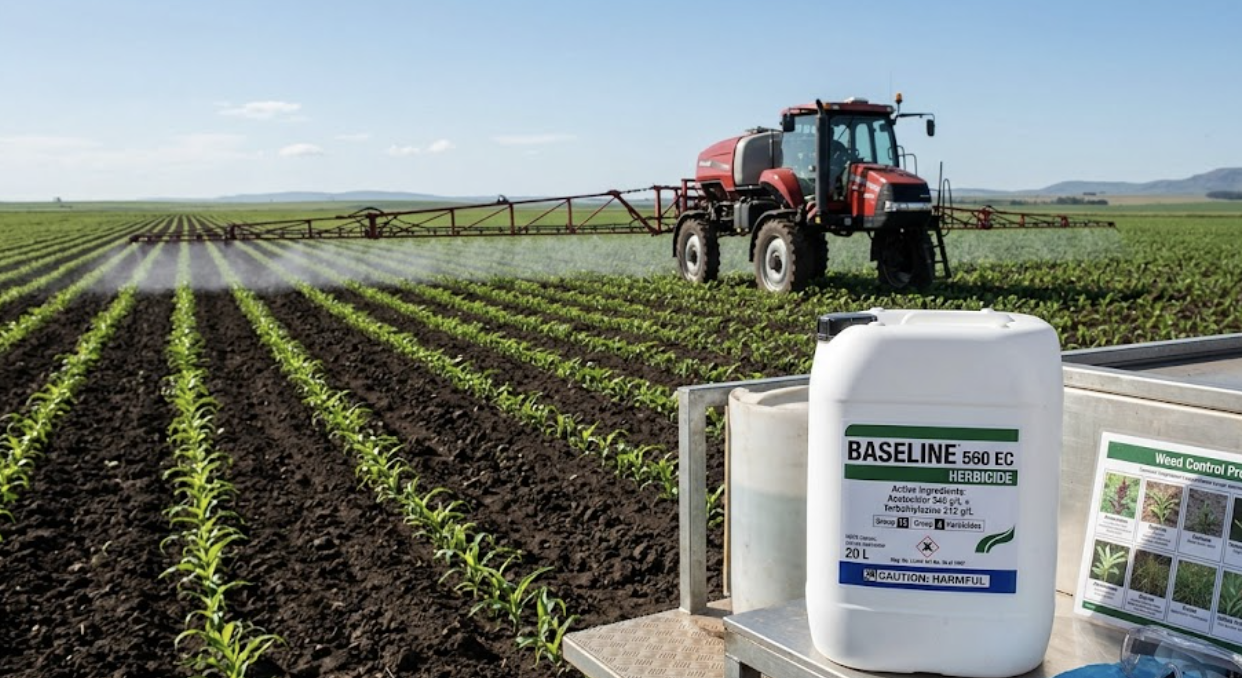
Application Guidelines & Best Practices
To maximize the performance of Baseline 560 EC, adhere to standard pre-emergence soil application rules:
- Soil Preparation: Apply to a smooth, firm, and clod-free seedbed. Large soil clods reduce spray coverage, allowing weeds to emerge from untreated soil pockets.
- Soil Moisture & Incorporation: The herbicide requires light rainfall or overhead irrigation (10-15mm) within 7–10 days of application to activate the chemical layer in the top 2-5cm of soil.
- Soil Texture Adjustments: Application rates must be adjusted based on soil clay percentage and organic matter content:
- Light/Sandy Soils (< 15% clay): Lower application rates to prevent crop injury.
- Heavy/Clay Soils (> 35% clay): Higher application rates to offset soil adsorption.
- Crop Safety: Ensure seeds are planted at a uniform depth (at least 3-5cm) below the treated soil zone. Always verify if a safener (such as furilazole or dichlormid) is recommended for sensitive crop hybrids.
Safety and Environmental Handling
Because Baseline 560 EC is an emulsifiable concentrate, it contains organic solvents requiring proper Personal Protective Equipment (PPE) during mixing and loading:
- PPE Requirements: Chemical-resistant nitrile gloves, safety goggles, long sleeves, and chemical boots.
- Water Buffer Zones: Terbuthylazine and acetochlor are persistent in soil and can leach in high-sandy profiles. Maintain buffer zones around water bodies, wells, and non-target vegetation.
- Storage: Store in original sealed containers away from heat sources, direct sunlight, and food/feed supplies.
Both Baseline 560 EC (Acetochlor + Terbuthylazine) and Metolachlor + Atrazine premixes or tank-mixes serve as standard pre-emergence, dual-action treatments in maize production. While both utilize a combination of a Group 15 grass herbicide and a Group 5 broadleaf herbicide, key differences in active ingredients, performance under cool conditions, carryover risk, and target weed spectrum distinguish the two systems.
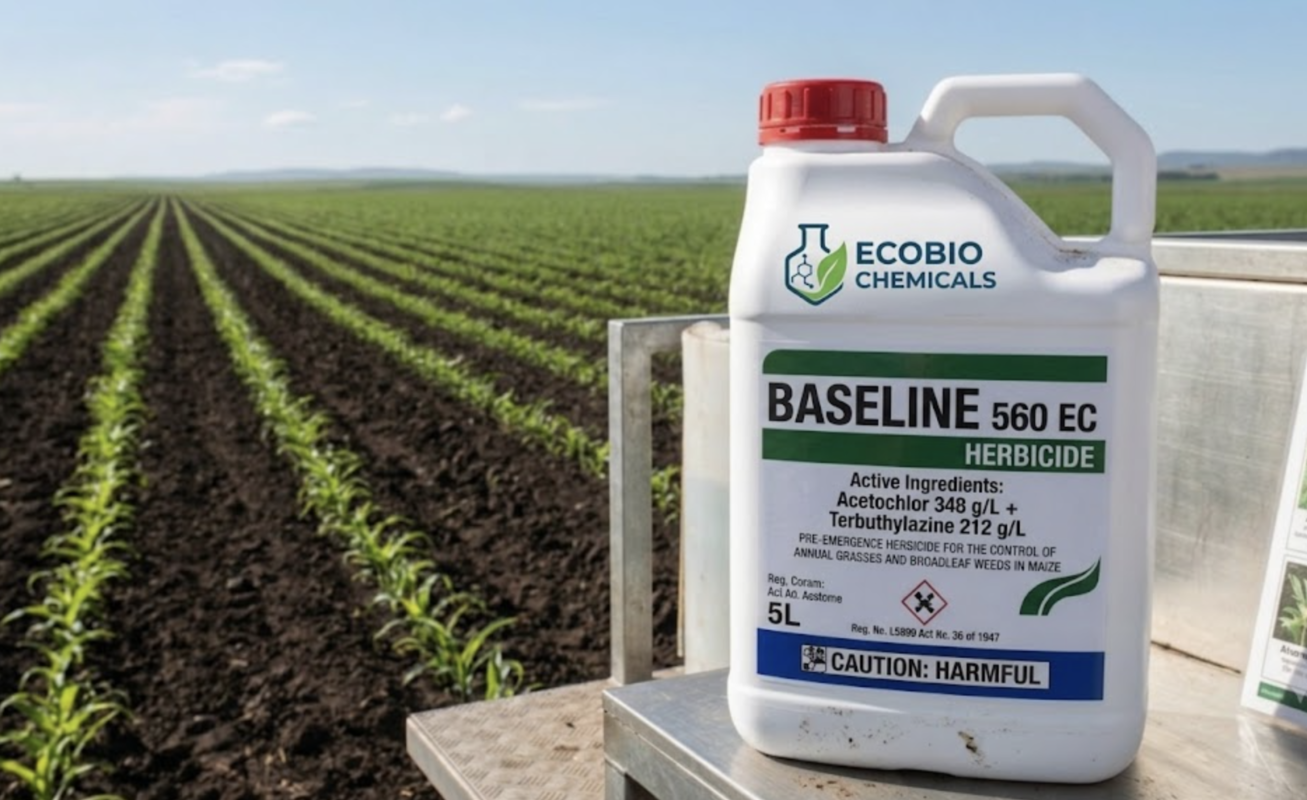
Direct Comparison
| Feature | Baseline 560 EC | Metolachlor + Atrazine |
| Active Ingredients | Acetochlor (348 g/L) + Terbuthylazine (212 g/L) | (S-)Metolachlor + Atrazine |
| HRAC Groups | Group 15 + Group 5 | Group 15 + Group 5 |
| Primary Grass Partner | Acetochlor: High activity on annual grasses and yellow nutsedge. Fast soil activation. | Metolachlor: High activity on annual grasses and yellow nutsedge. High crop safety. |
| Primary Broadleaf Partner | Terbuthylazine: Lower soil mobility; safer for rotational crops. | Atrazine: Strong broadleaf activity; higher leaching and carryover risk. |
| Performance in Cool Soil | Stronger early-season uptake in cooler soil profiles. | Standard performance; relies heavily on soil moisture activation. |
| Crop Safener Need | Requires a safener (e.g., dichlormid or furilazole) in sensitive hybrids. | Often paired with a safener (e.g., benoxacor) for high crop safety. |
1. Acetochlor vs. S-Metolachlor (The Grass & Nutsedge Component)
- Activity & Uptake: Acetochlor generally exhibits slightly higher water solubility and volatility than metolachlor, allowing it to activate slightly faster with minimal surface moisture.
- Yellow Nutsedge Suppression: Both Group 15 active ingredients effectively suppress yellow nutsedge (Cyperus esculentus), but Acetochlor typically shows slightly stronger activity in heavy clay soils or under high early-season weed pressure.
- Crop Safety: Metolachlor is generally considered slightly safer on sensitive maize cultivars or seed maize than Acetochlor. Because Acetochlor is more aggressive, Baseline 560 EC relies on proper planting depth (3-5cm) and safener technology to prevent seedling injury.
2. Terbuthylazine vs. Atrazine (The Broadleaf & Residual Component)
- Rotational Crop Safety (Carryover): Terbuthylazine has significantly lower water mobility and a safer plant-uptake profile compared to Atrazine. In dry seasons, Atrazine carries a higher risk of remaining in the topsoil and damaging sensitive follow-up crops (such as sunflowers, dry beans, or soybeans). Terbuthylazine breaks down more predictably, reducing recropping restriction windows.
- Environmental & Leaching Profile: Atrazine is more prone to vertical leaching into groundwater and surface runoff. Terbuthylazine binds more tightly to soil organic matter and clay particles, staying in the target root/germination zone longer.
Key Takeaway: Which One to Choose?
- Choose Baseline 560 EC if you operate in systems with quick crop rotations (e.g., maize followed by broadleaf legumes or oilseeds), cool early-season planting conditions, or heavy weed density requiring fast chemical activation.
- Choose Metolachlor + Atrazine if maximum crop tolerance on sensitive/inbred maize varieties is the top priority, or where local regulations strictly govern triazine choices.
Frequently Asked Questions About Baseline 560 EC
What is Baseline 560 EC used for?
Baseline 560 EC is a selective pre-emergence and early post-emergence herbicide used primarily in maize (corn) production. It provides broad-spectrum control over annual grasses (such as crabgrass and barnyard grass) and broadleaf weeds (such as pigweed and nightshade) by forming a protective chemical layer in the topsoil before weeds emerge.
What active ingredients are in Baseline 560 EC?
Baseline 560 EC contains a combination of two active ingredients: Acetochlor (348 g/L) and Terbuthylazine (212 g/L). Acetochlor acts as a Group 15 shoot/root inhibitor targeting grass species, while Terbuthylazine acts as a Group 5 photosystem II inhibitor targeting broadleaf species.
How much Baseline 560 EC do I apply per hectare?
The recommended application rate varies between 1.5 L/ha and 4.5 L/ha, depending entirely on soil clay content and organic matter. Light sandy soils (<10% clay) require lower rates (1.5-2.0 L/ha) to avoid crop injury, while heavy clay soils (>35% clay) require higher rates (3.5-4.5 L/ha) to ensure residual performance.
Does Baseline 560 EC require rain or irrigation after spraying?
Yes. Baseline 560 EC requires light rainfall or overhead irrigation (10-15mm) within 7 to 10 days of application. Moisture activates the herbicide, moving the active ingredients into the top 2-5cm of the soil where weed seeds germinate.