
Baseline 560 EC, Herbicides
How to Apply Baseline 560 EC: Dosage Rates, Calibration, and Soil Moisture Requirements
Aug
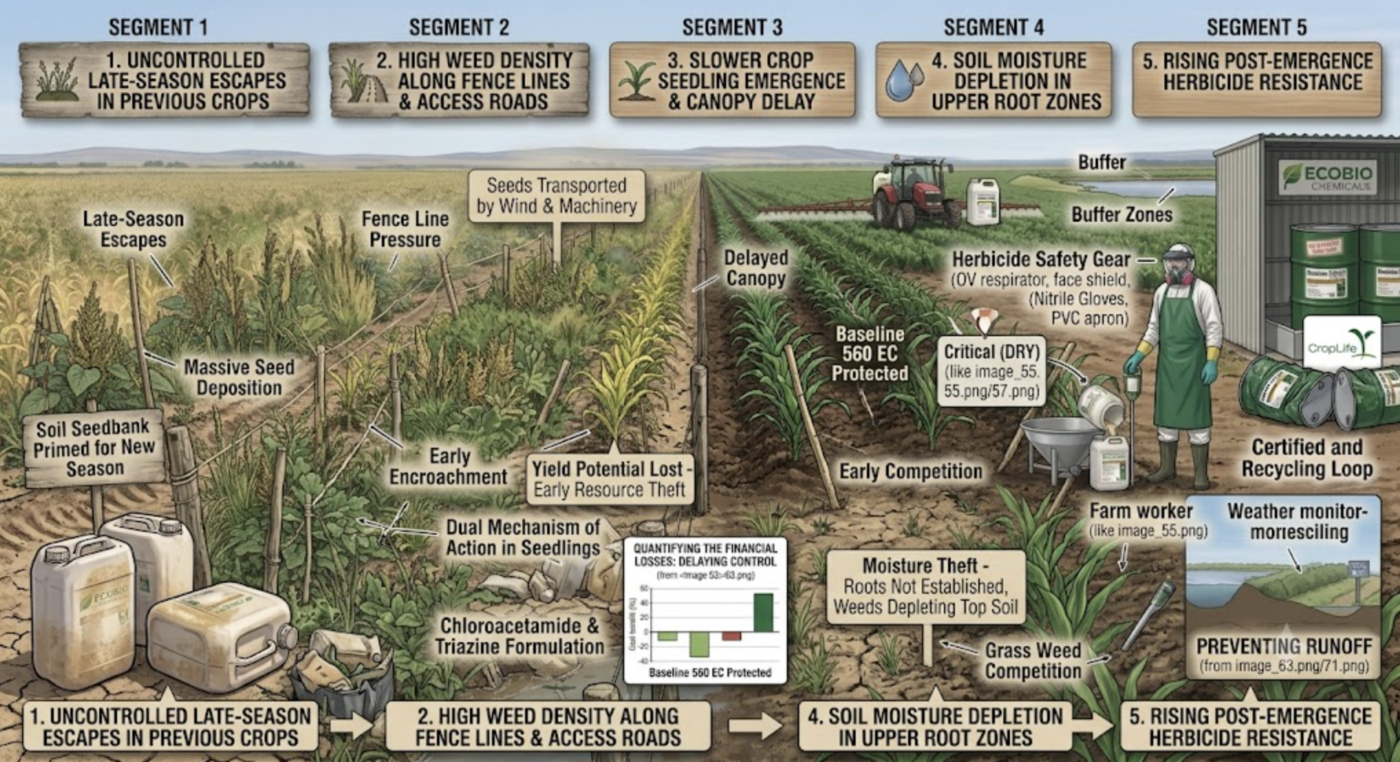
Baseline 560 EC (Acetochlor 348 g/L + Terbuthylazine 212 g/L) works by creating a uniform chemical seal in the upper soil layer, targeting germinating annual grasses and broadleaf weeds before they emerge. Proper application mechanics determine whether a pre-emergence herbicide provides full-season residual protection or results in crop injury and weed escapes.
Achieving effective crop yield protection requires precise calculation of the Baseline 560 EC application rate, correct sprayer nozzle selection, and applying under appropriate soil moisture conditions.
1. Recommended Dosage Rates by Soil Texture
Dosage rates depend directly on soil clay percentage. Clay particles and organic matter bind active ingredients; lighter soils with lower cation exchange capacity (CEC) require lower application rates to ensure crop safety, while heavy clay soils require higher rates to maintain residual control.
| Soil Texture | Clay Content (%) | Application Rate (L/ha) | Water Carrier Volume (L/ha) |
| Light / Sandy Soils | < 15% | 1.5-2.0 L/ha | 150-200 L/ha |
| Medium / Loam Soils | 15%-35% | 2.0-2.5 L/ha | 150-200 L/ha |
| Heavy / Clay Soils | > 35% | 2.5-3.2 L/ha | 200-250 L/ha |
Note: Always consult the product label for specific crop register guidelines (Maize, Soybeans, Grain Sorghum) prior to filling.
2. Soil Moisture and Activation Requirements
Pre-emergence herbicides require moisture to activate in the root zone. Applying Baseline 560 EC onto bone-dry, cloddy soil leads to chemical degradation from photodecomposition and wind displacement.
                    Pre-Emergent Soil Activation Pathway
  ┌─────────────────────────────────────────────────────────────────────────────┐
  │                                                                             │
  │  APPLY TO MOIST SEEDBED (or apply within 24h of rainfall/overhead center-pivot)│
  │                                     │                                       │
  │                                     ▼                                       │
  │     10–15 mm Moisture/Irrigation Dissolves Active Ingredients Into Top Soil  │
  │                                     │                                       │
  │                                     ▼                                       │
  │  Germinating Weed Seeds Absorb Acetochlor & Terbuthylazine During Emergence  │
  │                                                                             │
  └─────────────────────────────────────────────────────────────────────────────┘
- Moist Soil Preferred: Apply directly to a moist, smooth seedbed immediately following field preparation or planting.
- Activation Rainfall / Irrigation: Baseline 560 EC requires 10-15 mm of rainfall or overhead center-pivot irrigation within 3 to 5 days after application to bind the active ingredients into the top 20-30 mm of soil.
- Avoid Standing Water: Do not apply if fields are waterlogged or if heavy downpours (> 50 mm) are imminent, as excessive leaching can move chemistry into the crop root zone and cause crop stunting.
3. Step-by-Step Boom Sprayer Calibration Checklist
Learning how to calibrate sprayer for pre-emergent passes prevents over-application (which increases input costs and risk of crop damage) and under-application (which causes early weed escapes).
                    5-Step Field Sprayer Calibration Process
  ┌─────────────────────────────────────────────────────────────────────────────┐
  │                                                                             │
  │  1. CHECK NOZZLE PATTERN  ──► Install Low-Drift Air-Induction Flat Fan Nozzles│
  │  2. MEASURE GROUND SPEED  ──► Time Tractor Over 100m Distance in Target Gear │
  │  3. CATCH & MEASURE FLOW ──► Collect Output (L/min) Per Nozzle at ~3 Bar    │
  │  4. CALCULATE L/HA RATE   ──► L/ha = (60,000 x L/min Output) / (Speed x Space)│
  │  5. VERIFY SYSTEM PRESSURE ──► Re-check Boom Pressure & Agitation Function   │
  │                                                                             │
  └─────────────────────────────────────────────────────────────────────────────┘
- Select Correct Nozzles: Use low-drift Air-Induction Flat Fan Nozzles (e.g., AIXR or TTI 11002/11003) operating at 2.5-3.5 bar pressure to produce coarse to extremely coarse droplets, minimizing spray drift.
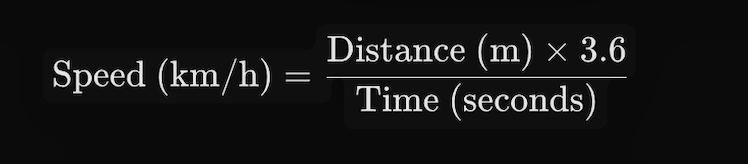
- Determine Exact Ground Speed: Mark out 100 meters in the field. Drive the tractor in the designated spraying gear with full tank weight and record the time in seconds.
- Measure Nozzle Flow Rate: Park the sprayer, set operating pressure, and catch water output from individual nozzles into a measuring cylinder for 60 seconds to determine Liters Per Minute (L/min).
- Calculate Application Rate (L/ha): Use the standard broadacre spraying formula:Carrier Volume (L/ha) =

- Adjust & Verify: If output deviates by more than 5% from target carrier volume (150-200 L/ha), adjust operating pressure or tractor speed and recalibrate.
On-Farm Chemical Storage, Handling & Stewardship Compliance
Safely applying Baseline 560 EC requires adherence to chemical storage regulations, enforcing protocols for the safe disposal of pesticide containers, and active measures for preventing runoff.
                   Compliant Agrochemical Stewardship Loop
  ┌─────────────────────────────────────────────────────────────────────────────┐
  │                                                                             │
  │  [✓] Store Compliance (SANS 10206 - 110% Capacity Concrete Bunding)         │
  │  [✓] Personal Safety (OV Respirator, Nitrile Gauntlets, PVC Apron & Goggles)  │
  │  [✓] Environmental Safety (Maintain Grassed Buffer Strips & Water Checks)   │
  │  [✓] Certified Recycling (Triple-Rinse, Puncture Drum & Route to CropLife)  │
  │                                                                             │
  └─────────────────────────────────────────────────────────────────────────────┘
- Storage Compliance (SANS 10206): Store emulsifiable concentrates in a dedicated, ventilated facility featuring non-porous concrete floors and a 200 mm bund wall capable of retaining 110% of stored liquid volume.
- Herbicide Safety Gear: Spray operators and induction hopper loaders must wear chemical-resistant 14 + mil nitrile gauntlet gloves, heavy PVC aprons, chemical splash goggles, and half-mask respirators with Organic Vapor (OV) cartridges to ensure complete farm worker chemical safety.
- Container Disposal & Runoff Mitigation: Triple-rinse empty containers directly into the spray tank during batch mixing, puncture the bottom to prevent secondary reuse, and route plastic to an accredited CropLife SA collector. Maintain 10-20 meter vegetated filter strips near rivers, dams, and drainage channels to prevent runoff contamination during summer storms.