
Baseline 560 EC
Herbicides Safety: Essential PPE and Safe Handling Guidelines for Emulsifiable Concentrate.
Aug
Herbicides Safety Gear.
Emulsifiable Concentrate (EC) herbicides are among the most effective pre-emergence and post-emergence weed control tools in broadacre agriculture. However, because EC formulations contain active ingredients dissolved in organic petroleum-based solvents, they pose unique exposure hazards during storage, transport, mixing, and spraying.
Unlike dry granules or water-soluble powders, liquid EC formulations can rapidly penetrate human skin, release volatile solvent vapors, and cause severe skin and eye irritation if handled improperly. Implementing strict guidelines for herbicide safety gear, mastering procedures for handling EC formulations, and training spray operators in farm worker chemical safety are essential to maintain field productivity and worker well-being.
Understanding EC Formulations & Exposure Hazards
Emulsifiable concentrates combine active ingredients (such as Acetochlor or Terbuthylazine) with liquid emulsifiers and aromatic solvents. When mixed with water in a spray tank, they form a milky white emulsion.
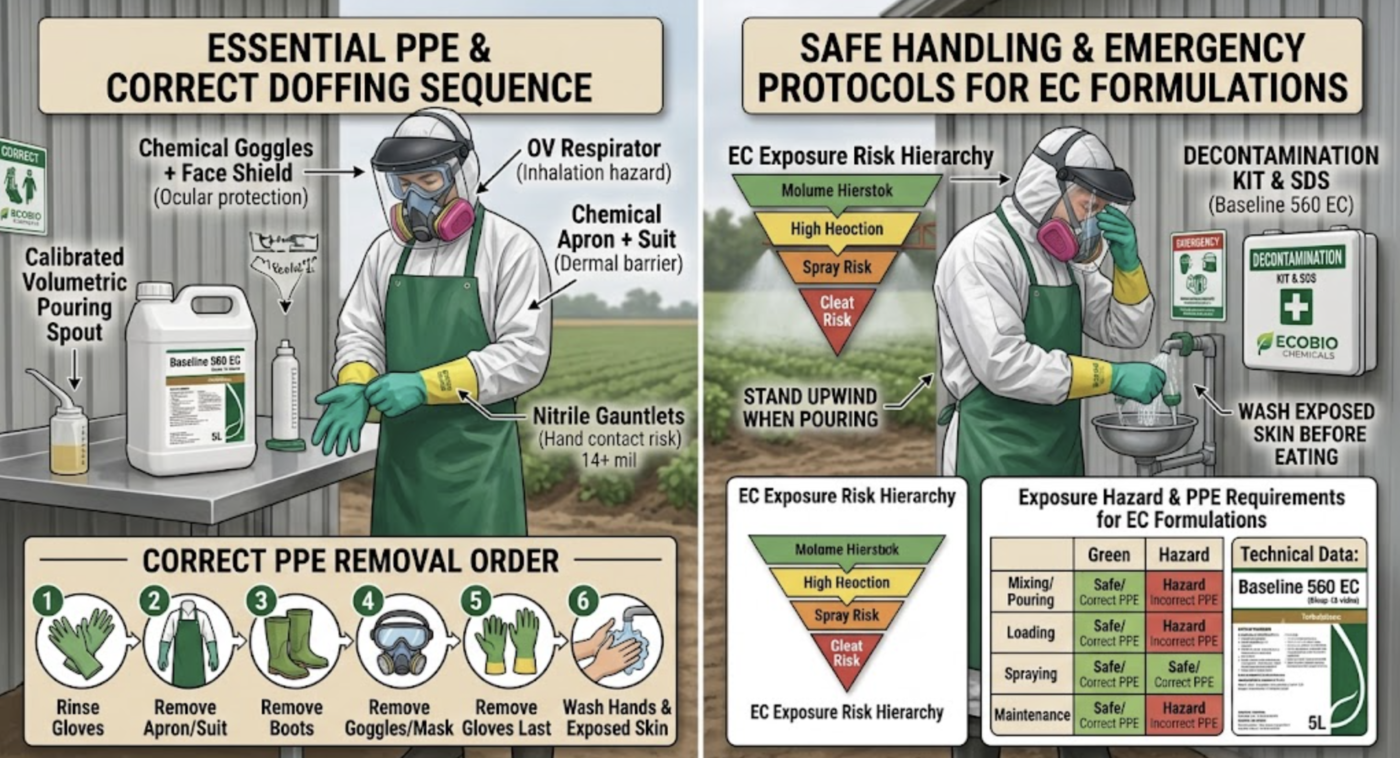
                         EC Exposure Risk Hierarchy
  ┌─────────────────────────────────────────────────────────────────────────────┐
  │                                                                             │
  │  1. MIXING & POURING CONCENTRATE ──► Highest Exposure (Splashes & Vapors)  │
  │  2. SPRAYER LOADING / CLEANING    ──► High Contact Risk (Hoses & Valves)    │
  │  3. FIELD APPLICATION (SPRAYING)  ──► Moderate Exposure (Drift & Mists)     │
  │  4. TANK DECONTAMINATION         ──► Low-to-Moderate Residual Exposure     │
  │                                                                             │
  └─────────────────────────────────────────────────────────────────────────────┘
Due to their solvent base, EC chemicals present specific risks:
- Dermal Absorption: Organic solvents carry active ingredients through intact skin significantly faster than water-based liquids.
- Inhalation Hazard: Concentrated solvent vapors during tank loading can cause respiratory discomfort, dizziness, or lung irritation.
- Ocular Toxicity: Direct splashes of undiluted concentrate can inflict severe corneal chemical burns.
Essential Personal Protective Equipment (PPE) Matrix
Matching the correct protective equipment to the specific handling activity ensures full-body coverage without compromising worker mobility or safety.
| Handling Activity | Respiratory Protection | Eye & Face Protection | Hand Protection | Body & Foot Protection |
| Pouring / Mixing Concentrates | Half-face respirator with Organic Vapor (OV) cartridges | Full chemical splash goggles + Face shield | 14 + mil Nitrile or Neoprene gauntlet gloves | Heavy PVC chemical apron over Tyvek/PVC coveralls |
| Field Spraying (Open Cab) | Half-face respirator or N95/OV combination | Wide-frame chemical safety glasses or goggles | Chemical-resistant nitrile gloves | Chemical-resistant coveralls + Rubber boots |
| Field Spraying (Enclosed Cab) | Respirator available inside cab for emergency exits | Safety glasses | Work gloves (Keep contaminated PPE outside cab) | Standard long-sleeve cotton work clothing |
| Equipment Maintenance & Rinsing | Half-face organic vapor respirator | Chemical splash goggles | Heavy-duty nitrile or butyl rubber gloves | Chemical-resistant suit + Waterproof rubber boots |
Mandatory Safe Handling Protocols for EC Herbicides – Herbicides Safety Gear
1. Preparation & Inspection Before Mixing
Inspect all PPE items for pinhole leaks, stiffening, or seam tears prior to touching chemical containers. Test chemical gloves by filling them with clean water and checking for small leaks before discarding the water.
2. Upwind Pouring Position
When measuring out undiluted EC liquid, always stand upwind of the spray tank induction hopper or mixing station. This prevents concentrated solvent vapors and inadvertent liquid splashes from blowing directly back onto the operator.
3. Systematic Doffing & Decontamination Sequence
Removing contaminated PPE in the wrong order can cause secondary contamination on clean skin or clothing. Always follow this sequence:
                            Correct PPE Removal Order
  ┌─────────────────────────────────────────────────────────────────────────────┐
  │                                                                             │
  │ 1. Rinse Gloves with Water ──► 2. Remove Apron & Suit ──► 3. Remove Boots   │
  │                                                                             │
  │ 4. Remove Goggles & Mask  ──► 5. Remove Gloves Last  ──► 6. Wash Hands &    │
  │                                                           Exposed Skin      │
  └─────────────────────────────────────────────────────────────────────────────┘
- Rinse Outer Gloves: Wash the exterior of your chemical-resistant gloves with soap and water before touching any other gear.
- Remove Outer Body Coverings: Unzip coveralls or remove chemical aprons from the inside out, avoiding contact with exterior surfaces.
- Remove Eye Protection & Respirator: Handle safety eyewear and facepieces by the elastic straps or headbands only.
- Remove Gloves Last: Peel gloves off inside-out so skin never touches the outer chemical residue.
- Immediate Hygiene: Wash hands, arms, and face thoroughly with clean water and heavy-duty soap before eating, drinking, or operating farm machinery.
Emergency First-Aid Protocols for Chemical Exposure
Every field mixing station must maintain an emergency eye-wash unit and a dedicated clean-water decontamination kit containing clean towels, soap, and spare clothing.
- Dermal Exposure (Skin Contact): Immediately remove contaminated clothing. Flush affected skin areas with clean running water and mild soap for at least 15 minutes. Do not apply grease or oil to the skin, as this can increase solvent absorption.
- Ocular Exposure (Eye Contact): Hold eyelids open and flush eyes at an eye-wash station with clean water for a minimum of 15 minutes. Seek immediate medical attention with the product Safety Data Sheet (SDS) on hand.
- Inhalation Exposure: Move the operator into open air immediately. Keep the individual resting comfortably and monitor breathing while seeking medical assistance.