
Silver mercury
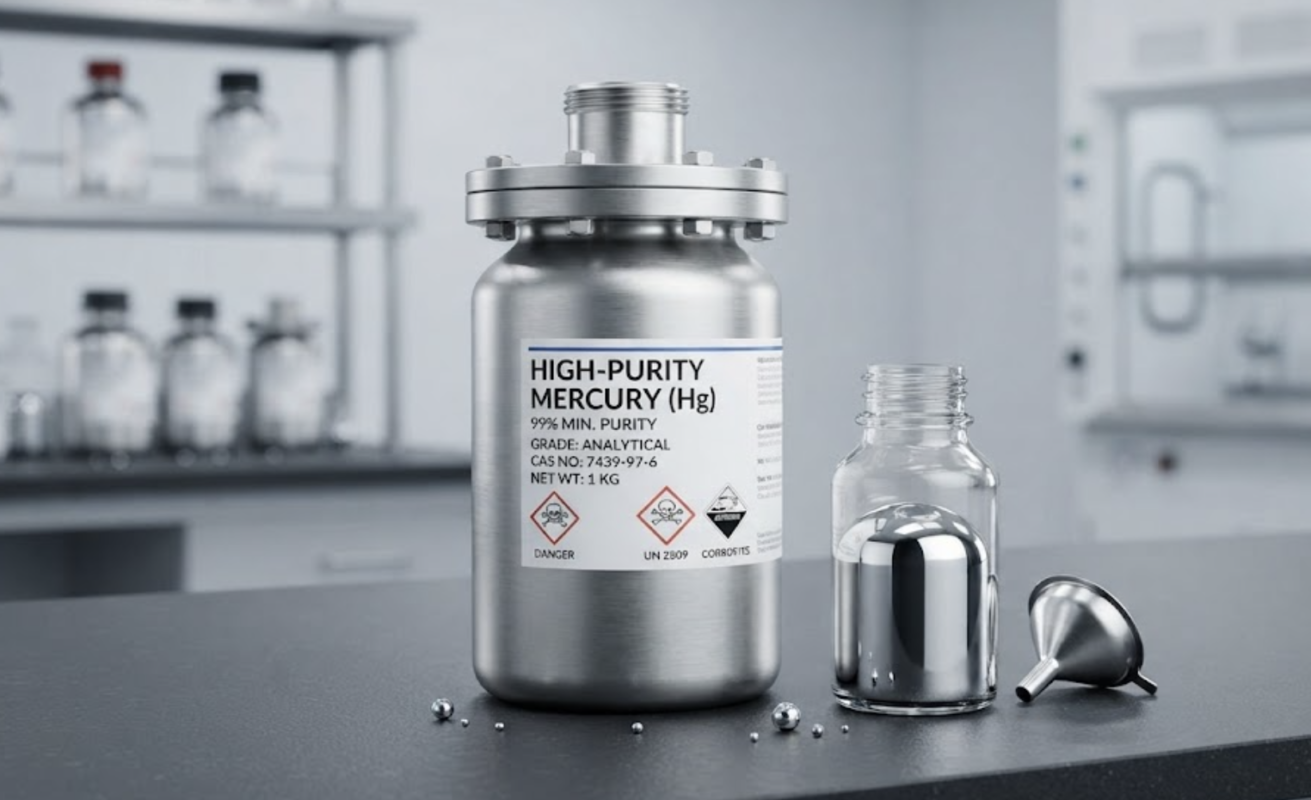
Comprehensive Guide to High-Purity Mercury (99%–99.99% Purity):
Apr
High-Purity Elemental Mercury (99%–99.99% Purity): Industrial Uses, Specifications, and Safety Protocols
High-purity elemental liquid mercury is a vital specialized substance utilized across several key industrial, technical, and scientific sectors. Known formally by its chemical symbol Hg and CAS number 7439-97-6, high-grade mercury offers unique physical and chemical characteristics that make it irreplaceable in specific applications.
What is High-Purity Mercury?
Liquid mercury frequently referred to as quicksilver is a dense, silvery-white metallic element that remains in a liquid state at standard room temperature. Industrial and laboratory grades typically range from 99% to 99.99% (triple-distilled) purity.
Key Physical and Chemical Properties
- Molecular Formula: Hg
- Atomic Weight: 200.59 g/mol
- Density: -13.53 g/cm³ at 25 °C (making it exceptionally dense)
- Melting Point: –38.83 °C
- Boiling Point: -357 °C
- Electrical & Thermal Conductivity: High conductivity profile valuable for specialized switching and instrumentation.
Primary Industrial and Scientific Applications – liquid mercury for sale
Despite modern regulatory transitions, high-purity mercury remains essential in controlled, specialized environments.
1. Scientific Research and Precision Instrumentation
High-purity grades (such as 99.99% lab-grade mercury) are heavily relied upon in analytical laboratories. It is utilized in calibration devices, barometers, manometers, and specialized scientific instruments where precise density and thermal expansion metrics are mandatory.
2. Precious Metal Recovery and Amalgamation
In regulated mining environments, high-purity mercury is utilized for specific gold and silver extraction processes. The liquid metal forms an amalgam with precious metals, allowing efficient separation and subsequent recovery through controlled heating.
3. Electrical and Electro-Mechanical Components
Because mercury maintains high electrical conductivity and fluid mobility, it is deployed in legacy or heavy-duty industrial switches, relays, and sensors where mechanical contact bounce must be eliminated.
Storage, Packaging, and Compliance Standards – CAS 7439-97-6
Due to its hazardous nature and high vapor pressure at room temperature, storing and transporting elemental mercury requires strict compliance with international safety frameworks.
- Approved Packaging: Mercury must be securely sealed in heavy-duty stainless steel flasks or high-density polyethylene (HDPE) bottles equipped with secure inner liners to prevent leakage or vapor escape.
- Transportation Classification: Classified under UN2809 for safe handling and compliant global distribution.
- Storage Environment: Store in cool, dry, well-ventilated facilities away from incompatible elements such as strong oxidizers and ammonia.
Industrial grade mercury – Safety, Handling, and Environmental Responsibility
Handling high-purity mercury demands professional expertise and adherence to strict safety protocols:
- Personal Protective Equipment (PPE): Operators must wear chemical-resistant gloves, protective eyewear, and respirators where vapor exposure is a risk.
- Regulatory Compliance: Sourcing and utilization must comply with environmental regulations, such as the Minamata Convention on Mercury, ensuring that waste streams are managed, recycled, or disposed of via authorized hazardous waste channels.
Conclusion
High-purity elemental mercury (99% to 99.99% purity) continues to drive critical functions in technical instrumentation, chemical synthesis, and specialized metallurgy. Ensuring safe operations requires rigorous adherence to container integrity, certified analysis documentation (CoA), and proper environmental compliance.
Hi, this is a comment.
To get started with moderating, editing, and deleting comments, please visit the Comments screen in the dashboard.
Commenter avatars come from Gravatar.