
Silver mercury
Understanding Liquid Silver Mercury:
Oct
Industrial Applications, Handling, and Safety Protocols – Liquid silver mercury sales
Elemental liquid mercury often referred to as silver mercury or quicksilver due to its distinctive metallic, mirror-like appearance is a unique heavy element. Known by its chemical symbol Hg and CAS number 7439-97-6, mercury remains a vital substance across specialized industrial, scientific, and technical sectors where no direct substitute offers the same physical properties.
This blog post explores the industrial characteristics of silver mercury, its authorized applications, and the rigorous safety and regulatory frameworks governing its procurement.
Key Physical Characteristics of Elemental Mercury
Liquid mercury is the only metallic element that exists entirely as a liquid under standard room temperature and pressure conditions.
- Appearance: Heavy, mobile, silvery-white liquid metal.
- Density: Exceptionally high density (-13.53 g/cm³ at 25 °C), making it ideal for weighting and balancing applications.
- Conductivity: Possesses unique electrical and thermal conduction properties.
- Expansion: Exhibits uniform thermal expansion across wide temperature ranges.
Core Industrial and Technical Applications
While consumer uses have drastically scaled back worldwide, high-purity silver mercury continues to drive essential processes in controlled industrial environments:
1. Scientific Instrumentation and Calibration
Laboratories and meteorological institutions rely on high-purity mercury for precise measurement and calibration devices. It remains the gold standard fluid for barometers, manometers, and specialized pressure-sensing instruments.
2. Analytical Chemistry and Electrochemistry
High-purity grades (such as 99.99% triple-distilled mercury) are utilized in specific analytical setups, including dropping mercury electrodes (DME) for polarographic analysis and precise laboratory reagents.
3. Electrical and Mechanical Switching
Because mercury maintains uninterrupted electrical contact and fluid mobility without mechanical wear, it is integrated into heavy-duty industrial relays, tilt switches, and specialized sensors.
Safe Procurement, Packaging, and Regulatory Compliance
Due to its hazardous nature and toxicity, handling liquid mercury requires uncompromising adherence to global safety and transport standards.
Packaging Standards
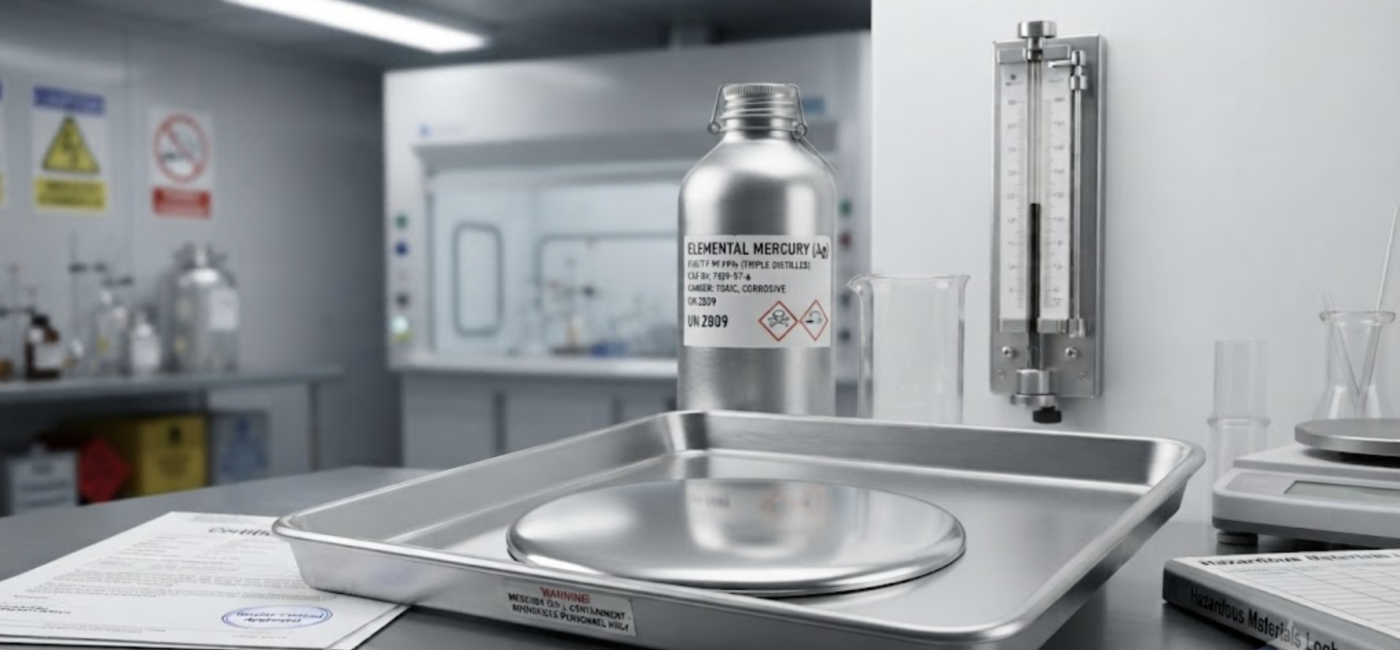
Mercury must be stored and transported in heavy-duty, UN-certified steel flasks or specialized high-density containers equipped with secure inner seals to prevent vapor leakage. It is classified under UN2809 as a hazardous material requiring specialized handling.
Global Regulations and Responsibility
Responsible procurement aligns with international agreements like the Minamata Convention on Mercury, ensuring that supply chains adhere to strict phase-down rules, authorized industrial usage verification, and certified documentation (Certificate of Analysis) for every batch.
Conclusion
Silver mercury is a specialized industrial material requiring strict regulatory compliance, certified quality assurance, and professional handling protocols. By respecting its chemical properties and maintaining safety standards, authorized industries can continue utilizing its unique capabilities responsibly.
Disclaimer: Elemental liquid mercury is toxic and hazardous.