
Silver mercury
Chemical handler PPE requirements – EcoBio Chemicals
Aug
Mastering Safety Data Documentation (MSDS/SDS) and Toxicity Management for Elemental Mercury
Understanding the specific chemical hazards of liquid mercury is vital for protecting laboratory personnel, warehouse staff, and chemical handlers. When operating industrial facilities, managing heavy metals goes far beyond basic routine logistics; it demands a meticulous commitment to occupational health, regulatory transparency, and rigorous chemical safety protocols.
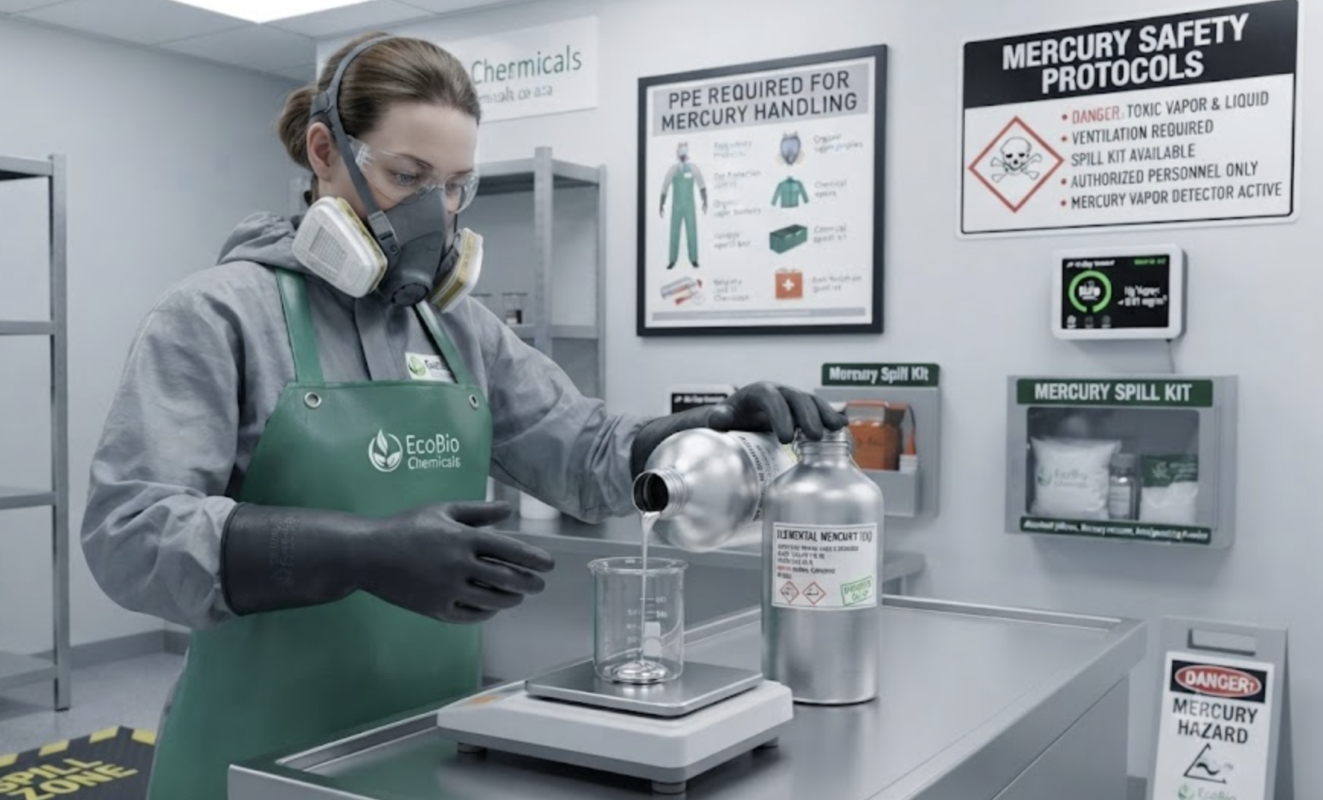
Chemical handler personal protective equipment.
Elemental mercury designated internationally under CAS 7439-97-6 exhibits unique physical behaviors, such as high density, high surface tension, and a continuous tendency to emit invisible, odorless vapors at room temperature. Because these characteristics present severe occupational hazards, establishing comprehensive safety documentation and exposure management strategies is an absolute legal and moral prerequisite for any industrial supplier or end-user.
1. Comprehensive Safety Data Sheets (MSDS/SDS): The Foundation of Facility Safety
Every chemical facility, laboratory, and warehouse handling hazardous substances must maintain immediate, unhindered access to up-to-date compliance literature.
- Mandatory Record Maintenance: Personnel must maintain up-to-date Material Safety Data Sheets (MSDS) or Safety Data Sheets (SDS) that explicitly outline the physical and health hazards associated with CAS 7439-97-6.
- Accessibility and Compliance: These documents must be readily accessible to all workers on the shop floor, ensuring that emergency responders, safety officers, and warehouse technicians can instantly review critical first-aid measures, fire-fighting procedures, and physical characteristics in the event of an incident.
- Supplier Transparency: High-purity chemical distributors must supply verified documentation alongside every batch, ensuring that downstream handlers are fully informed of the exact assay metrics, batch purity, and specific handling limitations of the material.
2. In-Depth Toxicity Analysis and Exposure Pathways: heavy-duty nitrile chemical gloves
Liquid mercury poses insidious health risks because its toxicity can manifest through multiple biological pathways, often accumulating or causing acute distress before symptoms are fully recognized.
- Inhalation Hazards: The primary route of occupational exposure is through the inhalation of mercury vapor. Because liquid mercury slowly volatilizes at standard room temperatures, unventilated workspaces can accumulate dangerous vapor concentrations that target the central nervous system, respiratory tract, and kidneys.
- Accidental Ingestion and Absorption: Documentation must clearly detail acute and chronic toxicity risks via accidental ingestion or systemic absorption through skin contact. While intact skin presents a lower absorption rate, prolonged exposure or contact through micro-abrasions can lead to systemic heavy metal toxification.
- Chronic Health Implications: Long-term, low-level exposure can result in erethism (characterized by psychological disturbances, tremors, and memory loss), gingivitis, and renal impairment, making proactive hazard awareness an essential pillar of industrial human resources and safety planning.
3. Engineering Robust Exposure Control Plans and PPE Mandates
Because administrative warnings alone cannot eliminate physical chemical hazards, facilities must implement structured engineering controls and strict personal protection protocols.
- Facility-Wide Exposure Protocols: Facilities are required to establish robust exposure control protocols, mandating the use of appropriate personal protective equipment (PPE) such as specialized chemical-resistant gloves, eye protection, and respiratory gear whenever handling open containers.
- Engineering and Environmental Controls: Workspaces must integrate specialized local exhaust ventilation systems, continuous ambient mercury vapor detectors, and sealed containment stations to suppress airborne contamination below permissible exposure limits (PEL).
- Training and Decontamination: Handlers must undergo rigorous safety training covering proper PPE donning and doffing procedures, safe container transfer techniques, and immediate evacuation protocols in case of accidental containment failure.
Conclusion
Navigating the complexities of heavy metal management requires uncompromising diligence. By maintaining crystal clear Safety Data Sheets, thoroughly understanding the acute and chronic pathways of mercury toxicity, and enforcing strict exposure control plans, industrial operations can safeguard their personnel while maintaining full compliance with global safety standards.
Disclaimer: Elemental liquid mercury is a toxic hazardous substance.