
Baseline 560 EC
Overcoming Early-Season Weed Pressure in Commercial Farming Operations using Baseline 560 EC
Aug
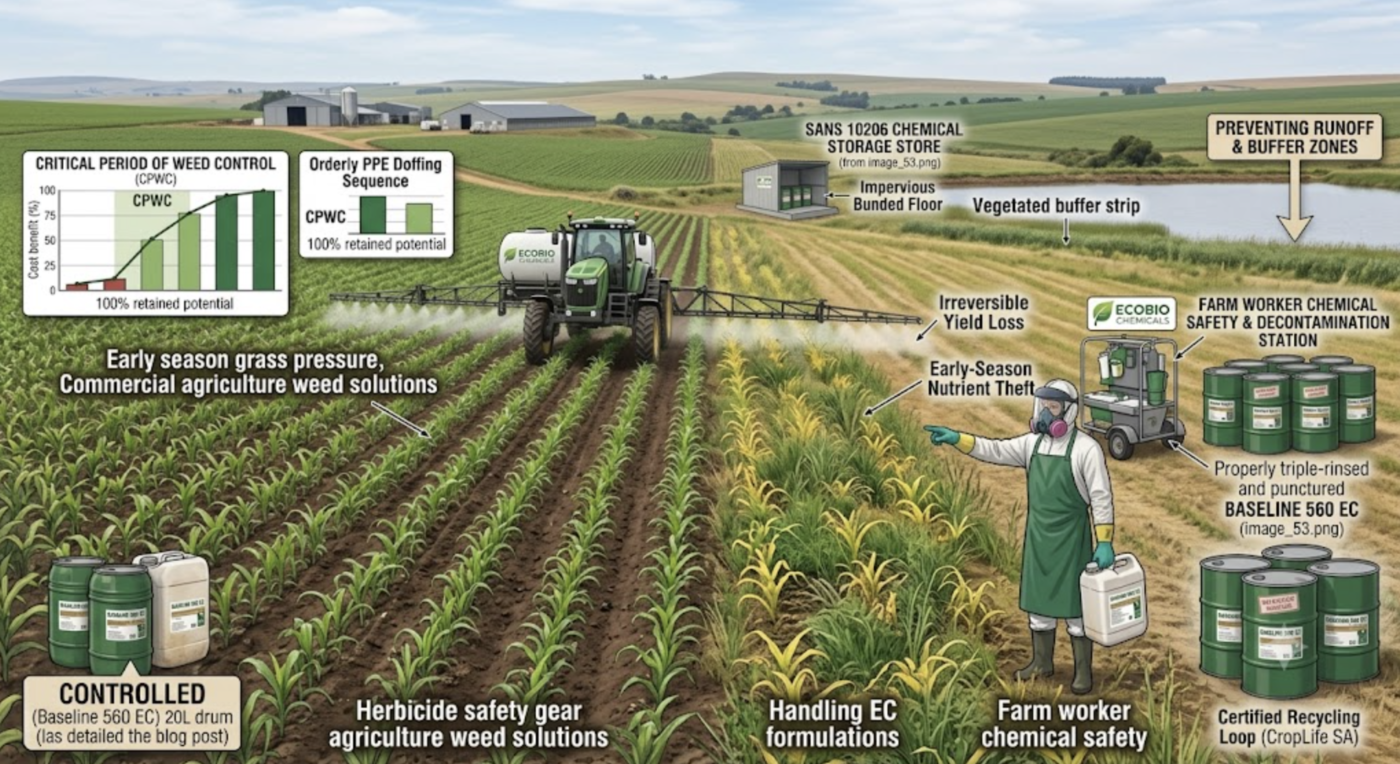
Baseline 560 ec – In broadacre crop production, the first 30 days after planting dictate the trajectory of full-season yield potential. Uncontrolled early season grass pressure from aggressive annual grasses like Digitaria, Echinochloa, and Setaria speciescompetes directly with emerging cash crops for vital soil moisture, nitrogen, and early sunlight.
Relying solely on post-emergence broad-spectrum burndowns after weeds are established forces crops to suffer early-stage yield drag. Transitioning to integrated commercial agriculture weed solutions built on soil-applied residual pre-emergence chemistry, such as Baseline 560 EC (Acetochlor 348 g/L + Terbuthylazine 212 g/L), establishes a weed-free window during crop emergence while optimizing overall operational spend.
The Agronomic Impact of Early-Season Grass Competition
Annual grass weeds possess aggressive early root growth mechanisms that strip moisture and surface fertilizers from soil before young crops can establish primary root networks.
                    Critical Period of Weed Control (CPWC)
  ┌─────────────────────────────────────────────────────────────────────────────┐
  │                                                                             │
  │  PLANTING ──► GERMINATION ──► 0 to 30 DAYS (CPWC) ──► CANOPY CLOSURE       │
  │                                      │                                      │
  │                                      ▼                                      │
  │                        [ Residual Barrier Protection ]                      │
  │                          (Baseline 560 EC Applied)                          │
  │                                      │                                      │
  │                                      ▼                                      │
  │                   100% Retained Crop Yield Potential                        │
  │                                                                             │
  └─────────────────────────────────────────────────────────────────────────────┘
- Nutrient Theft: Fast-germinating grass weed seeds absorb early nitrogen and phosphorus, stunting crop seedling vigor.
- Irreversible Yield Loss: Delaying weed control until weeds reach 50–100 mm height can cause permanent crop yield reductions of 10%-25%.
- Increased Post-Emergence Application Costs: Larger grass weeds require higher rates of post-emergence graminicides, accelerating herbicide resistance risks.
Pre-Emergent Residual Control vs. Reactive Management
Establishing an emulsifiable concentrate (EC) soil barrier at or immediately after planting eliminates weed seedlings as they germinate within the top 20–30 mm of soil.
| Operational Criteria | Reactive Post-Emergence Strategy | Integrated Pre-Emergence Strategy (Baseline 560 EC) |
| Timing of Application | After weeds emerge (3–6 leaf stage) | At planting or immediately pre-emergence |
| Crop Yield Impact | High risk of early-season nutrient competition | Zero competition during the critical 30-day window |
| Pass Frequency | 2-4 spray passes required per season | 1 pre-emergence pass (+ minimal post spot-treatments) |
| Resistance Profile | High risk of single-site active resistance | Low risk via dual-mode actives (Acetochlor + Terbuthylazine) |
| Fuel & Labor Costs | High due to repeated field tractor passes | Low due to single consolidated application pass |
Safe Handling Protocols & PPE for EC Formulations
Because Emulsifiable Concentrate (EC) formulations contain active ingredients suspended in heavy petroleum solvents, proper farm stewardship, complete herbicide safety gear, and strict adherence to farm worker chemical safety guidelines are essential during measuring, mixing, and loading.
                      Worker PPE & Chemical Safety Workflow
  ┌─────────────────────────────────────────────────────────────────────────────┐
  │                                                                             │
  │  Storage Inspection (SANS 10206) ──► Don Herbicide Safety Gear              │
  │                                            │                                │
  │                                            ▼                                │
  │  Certified Drum Recycling ◄── Triple-Rinse ◄── Measure Upwind (EC Solvents) │
  │   (CropLife SA Accredited)    Containers       (OV Respirator + Nitrile)    │
  │                                                                             │
  └─────────────────────────────────────────────────────────────────────────────┘
Essential Safety Gear Checklist
- Respiratory Protection: Half-mask dual-filter respirator fitted with Organic Vapor (OV) cartridges to filter solvent fumes during container opening and tank filling.
- Dermal Barriers: Heavy-duty 14+ mil nitrile gauntlet gloves (providing full wrist and forearm protection) paired with a chemical-resistant PVC apron or full chemical suit.
- Ocular Safety: Enclosed chemical splash goggles or full-face shields to prevent splash contact during concentrate transfer.
Best Practices for Handling EC Formulations
- Upwind Mixing: Always measure concentrated EC liquids upwind of mixing hoppers and induction bowls to prevent inhalation of concentrated vapors.
- Decontamination Readiness: Maintain active emergency eyewash stations and clean wash water within 10 meters of all chemical mixing pads.
- Orderly Doffing Sequence: Train operators to wash gloves before removal, remove aprons and suits next, remove eye and respiratory protection third, and remove gloves last before washing exposed skin thoroughly with soap and clean water.
On-Farm Chemical Storage & Container Management
Maintaining full regulatory compliance and mitigating environmental liabilities requires aligning farm facilities with chemical storage regulations, enforcing protocols for the safe disposal of pesticide containers, and actively preventing runoff.
- Store Infrastructure (SANS 10206): Store chemicals in a lockable, cross-ventilated room featuring an impervious concrete floor with a 200 mm continuous bund wall capable of containing 110% of the maximum liquid storage capacity.
- Environmental Buffer Zones: Maintain un-sprayed grassed filter strips of at least 10–15 meters adjacent to natural streams, farm dams, and boreholes to absorb potential surface run-off during heavy summer rainfall.
- Triple-Rinsing & Recycling: Immediately upon emptying 5L or 20L herbicide drums, execute a 3-stage triple rinse (filling 1/4 full with clean water, shaking 30 seconds, and draining into the spray tank). Puncture the bottom of the clean drum to prevent re-use for food or water storage, and route it to an accredited CropLife SA recycling facility.